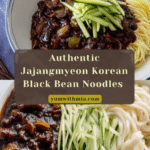
Jajangmyeon (Korean Black Bean Noodles) Recipe
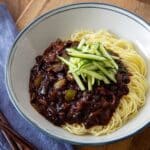
Jajangmyeon is a classic Korean-Chinese dish featuring chewy noodles topped with a savory black bean paste sauce cooked with tender pork and fresh vegetables. This comforting and flavorful dish is perfect for a satisfying meal and can be garnished with crisp cucumber and served with traditional sides like kimchi and pickled radish.
- Prep Time: 20 minutes
- Cook Time: 30 minutes
- Total Time: 50 minutes
- Yield: 4 servings 1x
- Category: Main Dish
- Method: Stovetop
- Cuisine: Korean
Ingredients
Scale
Sauce and Meat
- ⅔ cup Korean black bean paste (chunjang)
- ¼ cup neutral oil (vegetable or canola oil)
- 1 pound boneless pork shoulder, small diced (pork butt or pork belly can also be used)
- 3 tablespoons garlic, minced (about 5–6 cloves)
- 1 tablespoon ginger, peeled and minced (about ½ inch piece)
- 3 tablespoons oyster sauce
- 2 tablespoons granulated sugar
- 2 cups water
Vegetables
- 1 medium yellow onion, small diced
- 10 ounces green cabbage, roughly chopped (about 2 cups)
- 1 Korean zucchini or regular zucchini, small diced
Thickener
- 3 tablespoons cornstarch mixed with 3 tablespoons water (cornstarch slurry)
Noodles and Garnishes
- 4 bundles Korean fresh noodles
- English cucumber, julienned (optional garnish)
- Kimchi (optional side)
- Danmuji (pickled yellow radish, optional side)
Instructions
- Stir fry the black bean paste (chunjang): Heat the oil in a small nonstick saucepan over medium heat. Once hot, add the black bean paste and stir constantly for about 2 minutes until fragrant. Remove from heat and set aside.
- Cook the pork: In a large saucepan or pot, drain excess oil from the fried black bean paste. Add a little more oil if needed to lightly coat the pan. Heat over medium-high heat, add diced pork, and stir fry until lightly browned on all sides and no longer pink. Render fat well if using pork belly.
- Add aromatics and vegetables: Reduce heat to medium. Add minced garlic and ginger, stir fry for 10 to 20 seconds until fragrant. Then add diced onion, zucchini, and chopped cabbage. Stir fry for a few minutes until cabbage starts to wilt.
- Combine with black bean paste: Add the stir fried black bean paste back into the pot and stir well to coat the meat and vegetables evenly.
- Simmer the sauce: Pour in water, oyster sauce, and sugar. Bring to a boil, then reduce heat to a moderate simmer. Cook for 10 to 15 minutes until the sauce has reduced and reached desired saltiness. Adjust according to the saltiness of your noodles.
- Cook the noodles: While the sauce simmers, bring a pot of water to a boil. Add noodles and cook according to package instructions. Drain and rinse Korean fresh noodles under cold water to remove excess starch. Drain completely and portion into serving bowls.
- Thicken the sauce: Mix the cornstarch slurry again before using. Slowly drizzle the slurry into the simmering sauce while stirring continuously. Let the sauce thicken and become glossy within a few seconds. Adjust slurry amount if sauce consistency differs.
- Serve: Ladle the hot jajangmyeon sauce over the noodles. Top with julienned English cucumber as a fresh garnish. Serve immediately with optional kimchi and danmuji on the side. Mix well before eating and enjoy while hot.
Notes
- Use neutral oil like vegetable or canola for frying the black bean paste to avoid overpowering the flavor.
- Adjust the sauce saltiness based on the brand and type of noodles used; some noodles may absorb more flavor, requiring more or less sauce reduction.
- The cornstarch slurry thickens the sauce for a glossy finish; adjust slurry quantity if simmering times vary.
- Optional garnishes like cucumber add freshness and crunch that balance the rich sauce.
- Traditional sides such as kimchi and danmuji complement the savory flavors and add contrasting textures.
Keywords: Jajangmyeon, Korean black bean noodles, Korean noodle dish, chunjang sauce, pork black bean sauce noodles, jajangmyun, Korean comfort food