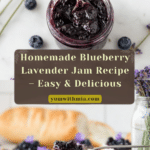
Blueberry Lavender Jam Recipe
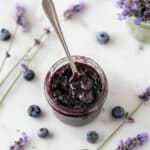
This homemade Blueberry Lavender Jam recipe combines fresh blueberries with aromatic culinary lavender for a uniquely floral twist on traditional jam. Using simple ingredients like sugar, lemon juice, and pectin, this recipe guides you through the process of making, testing, and safely canning your jam for long-lasting enjoyment.
- Prep Time: 15 minutes
- Cook Time: 40 minutes
- Total Time: 55 minutes
- Yield: 4 half-pint jars (approximately 4 cups) 1x
- Category: Jam & Preserves
- Method: Stovetop
- Cuisine: American
- Diet: Vegetarian
Ingredients
Scale
Jam Ingredients
- 5 cups blueberries (rinsed and picked over, about 950g)
- 3 cups sugar (594g)
- 1/3 cup lemon juice (about 2 – 3 lemons, 74g)
- 1 1/2 tbsp culinary lavender
- 1/4 cup powdered pectin (4 tbsp)
Instructions
- Prepare Jars and Lids: Place 4 half-pint (8 oz.) mason jars in a large stock pot or canning pot and add enough water to cover them. Bring the water to a simmer. In a separate small saucepan, simmer the jar lids in water to warm them. Rings do not need warming.
- Chill Plate for Testing: Put a small plate in the freezer to use later for checking the jam’s gel stage.
- Infuse Sugar with Lavender: Combine the sugar and culinary lavender in a food processor and pulse about 20 times to break up the flowers. Alternatively, rub lavender between your fingers with sugar to release flavor. Set aside.
- Crush Blueberries and Add Pectin: Place blueberries into a large wide pot and crush with a potato masher. Stir in powdered pectin thoroughly. Ensure plenty of space at the top of the pot for boiling.
- Add Lemon Juice and Heat Mixture: Stir lemon juice into the crushed blueberry and pectin mixture. Bring to a boil over medium-high heat, stirring occasionally, then add the lavender-infused sugar all at once. Stir until sugar dissolves completely.
- Boil Jam Hard: Return the mixture to a vigorous rolling boil and let it boil hard for 60 to 90 seconds while stirring constantly to prevent burning.
- Simmer to Gel Stage: Reduce heat and simmer for 20 to 25 minutes until the jam reaches the gel stage. Test by placing a teaspoon of jam on the chilled plate, refrigerating for one minute, then swiping your finger through; if it stays separated, the jam is ready.
- Remove Foam: Take the pot off heat and skim off as much foam as possible without removing too much jam.
- Fill Jars: Using canning tongs or tongs wrapped with a dish towel, remove jars from simmering water. Pour out the water and insert a wide-mouth funnel into one jar. Ladle the hot jam into jars, leaving 1/4 inch headspace at the top. Wipe rims with a damp towel to ensure cleanliness.
- Apply Lids and Rings: Lift hot lids from simmering water, place on jars, and screw on rings fingertip-tight without over-tightening.
- Process Jars in Boiling Water: Place jars in a canning rack or carefully lower them one by one into boiling water. Make sure water covers jars by at least one to two inches. Boil jars for 10 to 12 minutes for proper sealing.
- Cool and Seal: Remove jars from water and place them on a dishtowel on the counter to cool. Allow jars to sit undisturbed for 24 hours until lids ‘ping’, indicating sealed jars. Press the lid to test the seal; if the lid flexes, refrigerate and consume first.
Notes
- Use new canning lids for proper sealing; avoid reusing old lids.
- Keep a small plate in the freezer before starting to test the jam’s gel stage.
- When adding lavender to sugar, gently breaking up the flowers maximizes infusion without overly crushing.
- Do not over-tighten the jar rings; fingertip-tight is sufficient to allow air to escape during processing.
- Make sure jars are fully submerged by at least an inch in boiling water during processing to ensure safe preservation.
- If any jars do not seal properly, refrigerate them and consume within a reasonable timeframe.
- Skim foam off the jam to help improve texture and appearance.
Keywords: blueberry jam, lavender jam, homemade jam, canning, blueberry preserves, floral jam
Find it online: https://yumwithmia.com/blueberry-lavender-jam-recipe/